
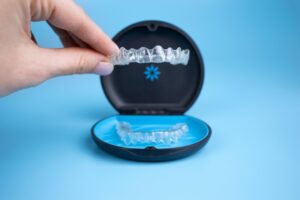
Many people think orthodontic treatment is only meant to straighten crooked teeth, but alignment issues often go deeper than appearance alone. Bite problems—also known as malocclusions—can affect how your upper and lower teeth come together, impacting chewing, speech, and even jaw comfort. The good news is that clear aligner systems like Invisalign can often correct certain bite issues in addition to improving the appearance of your smile.
What is a Bite Problem?
A healthy bite occurs when your upper and lower teeth fit together properly. When this alignment is off, it can lead to uneven pressure on teeth and jaw joints. Common bite problems include overbites, underbites, crossbites, and open bites.
These issues may cause symptoms such as tooth wear, jaw pain, headaches, difficulty chewing, or speech challenges. Over time, untreated bite problems can increase the risk of chipped teeth, gum recession, and temporomandibular joint (TMJ) discomfort.
How Invisalign Corrects Bite Issues
Invisalign works by using a series of custom-made clear aligners that gradually shift teeth into better positions. Each aligner applies controlled pressure to specific teeth, guiding movement over time according to a carefully planned digital treatment process.
For many patients, Invisalign can successfully treat mild to moderate bite concerns. Attachments—small tooth-colored shapes bonded temporarily to teeth—may be used to help aligners gain better grip and achieve more precise movements. Elastics (rubber bands) are sometimes added to correct jaw alignment and improve how the teeth come together.
As teeth shift into healthier positions, bite balance improves along with overall function.
Which Bite Problems Can Invisalign Treat?
Invisalign is commonly effective for correcting:
- Mild to moderate overbites.
- Underbites in select cases.
- Crossbites.
- Open bites.
- Crowding or spacing that affects bite alignment.
However, severe skeletal bite issues involving jaw structure may require additional orthodontic treatment or, in rare cases, surgical intervention. A consultation with a dentist or orthodontist is necessary to determine whether Invisalign is the right solution.
Benefits Beyond Appearance
Correcting a bite problem does more than enhance your smile. Proper alignment distributes chewing forces evenly, reducing strain on teeth and jaw joints. Patients often experience improved comfort, easier oral hygiene, and decreased risk of long-term dental damage.
Invisalign is more than a cosmetic treatment—it can be an effective tool for improving both dental function and oral health. While not every bite issue can be treated with aligners alone, many patients achieve significant functional improvements alongside straighter teeth. A professional evaluation can help determine whether Invisalign can help you achieve a healthier, more balanced bite and a confident smile.
About the Author
Dr. Sujal Patel has dental degrees from both India and New York University, where he earned a Doctor of Dental Surgery degree in 2013. He remains committed to furthering his education and also stays current through memberships in the American Dental Association and the Texas Dental Association. Want a straighter, healthier smile? We can help with Invisalign! Book online or call our Dallas office at (972) 818-5649.